Biomechanics, Breath, and the Management of Intra-Abdominal Pressure


A modern approach to core integrity on the reformer
In today’s Pilates landscape, still one of the most important teachings is how we understand and manage intra-abdominal pressure (IAP).
This is where classical principles meet contemporary science—and where thoughtful instruction can significantly impact long-term client outcomes.
The Core as a Functional Cylinder
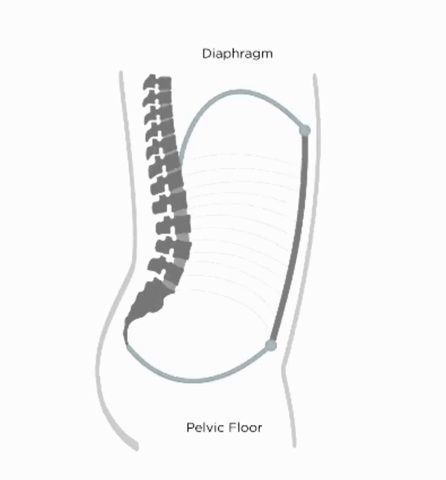
The core operates as an integrated system.
Diaphragm (top)
Pelvic floor (base)
Abdominals and fascia (walls)
Spinal stabilisers (posterior support)
Breathing is what animates this system and also what needs to be managed when we change the shape of the canister, or hold the canister under pressure - like a water bottle getting squeezed.
When pressure is well managed, we see:
Stability
Control
Efficient load transfer
The Role of Breath in Pressure Management
On inhale:
The diaphragm descends
Pressure increases within the abdominal cavity
On exhale:
The diaphragm recoils
The deep abdominals and pelvic floor respond
This relationship is what allows us to modulate pressure as we breath naturally.
As we exercise we increase intra-abdominal pressure as we fold our body for example into sit-ups.
Why Lateral Breathing Is Prioritised over Belly Breathing
Second-generation Pilates instructor Lesley Logan speaks to the importance of lateral breathing and how it helps to maintain connection through each repetition in a curl up, rather than resetting the system repeatedly.
This is where lateral breathing becomes valuable.
It allows us to:
Maintain abdominal support
Avoid over-relaxation of the front body
Sustain tension and connection through movement
In contrast, excessive diaphragmatic (or “belly”) breathing during loaded work can:
Disrupt core integrity
Increase downward pressure on the pelvic floor
Reduce efficiency in transitions
Recognising Poor Pressure Strategies
A key skill in teaching is identifying when pressure is not being managed effectively.
Common signs include:
Doming through the midline
Rib flare or chest gripping
Breath holding
Pelvic floor symptoms (spoken or unspoken)
These are not just position or technique issues—they are pressure management issues.
Rethinking Traditional Cueing
Cues like “belly button to spine” are increasingly outdated—particularly across diverse female populations.
They can:
Over-compress the abdominal cavity
Direct pressure downward
Increase strain on the pelvic floor
Given that a significant proportion of women—particularly over 50—experience some degree of prolapse, this matters.
A more contemporary approach focuses on:
Breath-led engagement
Pressure distribution through the ribcage with lateral breathing
Responsiveness over rigidity
Working Across Different Client Populations
Postpartum Clients
Elevated risk of pelvic floor dysfunction, diastasis, and prolapse
Require progressive loading and coordinated breath
Benefit from prioritising pelvic floor awareness before intensity
Perimenopausal and Menopausal Clients
Changes in collagen and muscle tone
Often long-standing compensations
Require gradual, intelligent progression
Younger Clients
May still present with doming or poor pressure control
Early intervention is preventative, not corrective
Deconditioned Clients
Reduced proprioception and interoception
Often misread as “just unfit” rather than lacking coordination
Require clear, simplified cueing and regression
Application on the Reformer
Managing intra-abdominal pressure is not about limiting clients—it’s about progressing them intelligently.
Planks:Lateral breathing to maintain support without dropping into the lumbar spine
Core work (hundreds, C-curve holds):Consistent exhale to regulate pressure and avoid doming
Lower body work (lunges, scooters):Integrating posture and breath (“exhale to push, inhale to expand”)
When fatigue sets in, breath is often the first system to fail—followed by structure.
The Responsibility of the Instructor
As instructors, our role extends beyond delivering exercises. We are helping clients manage load in stabilising challenges as well as flexion exercises and interpreting subtle signs of dysfunction.
Breath is the tool that allows us to do this in real time.
It reconnects clients to their deep system, supports safe progression, and builds resilience from the inside out.
A Modern Pilates Lens
This approach reflects a broader shift in Pilates:
From:
Static cues
Aesthetic goals
Uniform teaching
To:
Adaptive, client-centred instruction
Integration of biomechanics and physiology
Long-term health outcomes
Managing intra-abdominal pressure is not just a technical skill.
It is a reflection of how deeply we understand the body—and how responsibly we teach it.


Comments