The Biochemical Power of Breath in Reformer Pilates

Updated: May 6
How breath chemistry shapes stamina, performance, and nervous system regulation
This is the first in a 2-part series looking at the breath in pilates performance for teachers.

In reformer Pilates, we often speak about breath as rhythm, flow or a biomechanical strategy for core stability. But beneath that, breath is biochemical.
The breath directly influences oxygen delivery, carbon dioxide tolerance, nervous system regulation, and ultimately—how long and how well a client can sustain movement.
As instructors, if we’re not teaching breath from this lens, we’re missing one of the most powerful tools we have to improve performance and client experience.
Reformer Pilates Is an Endurance Modality
Drawing on definitions from strength practitioners like Stacy Sims and studio educator Sophie Coleman, reformer Pilates sits most accurately within muscular endurance training:
Submaximal loads
Higher repetitions (often 10–20+)
Sustained effort over time
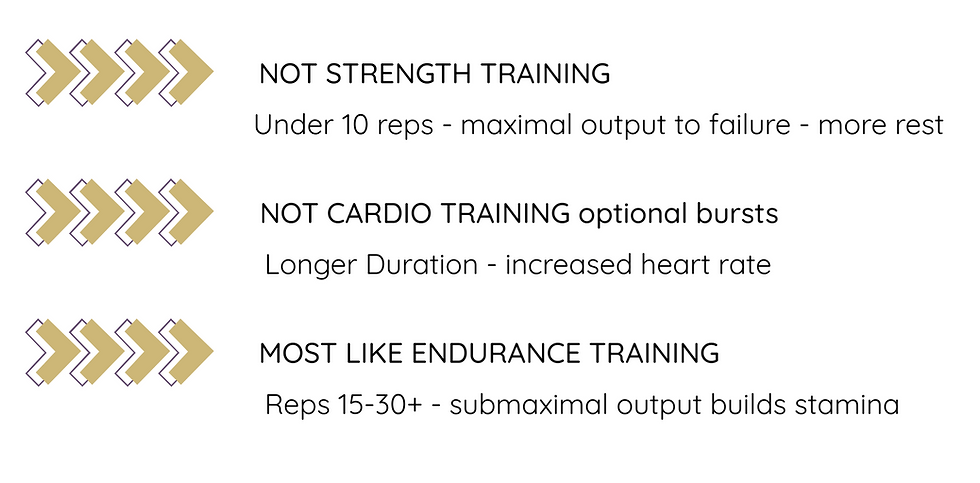
With Pilates as an endurance modality it means the efficiency of breathing is central.
Without adequate oxygen delivery and carbon dioxide regulation, muscles continue to contract—but less efficiently. What we often interpret as “fatigue” or “poor form” can be a breathing limitation.
If we are stuck in limited thinking that pilates should be a meditation and breathing slow, not exhaling fully, or only nasal breathing during a more intense burst of movement/core strengthening then your breath might not be supporting your muscles.
Joseph Pilates himself said:

Oxygen, Carbon Dioxide, and Performance
Let's understand the rationale for good breathing from a scientific perspective.
During exercise, the body produces carbon dioxide (CO₂) as a byproduct of energy metabolism.
If CO₂ accumulates:
Blood pH becomes more acidic
Muscles fatigue faster
Movement efficiency decreases
Effective breathing—particularly intentional exhalation—helps regulate this system.
Encouraging clients to exhale during effort, especially in longer sets or core work, is not just a biomechanical cue. It’s a biochemical strategy to maintain ph balance, delay muscular fatigue and sustain output.
Breathing In vs Breathing Out
The big exhale helps the body balance biochemically as you move and demand more of your muscles. The inhale on the otherhand has other super-powers.
In more relaxed or slow and controlled outputs we can breathe in and out through the nose. This is beneficial from a regulating perspective on your nervous system. Most people are now familiar with the benefit of stress reduction through nasal breathing and down-regulation.
Research led by applied physiologist Joe Watson highlights that nasal breathing can even slow brainwave activity, supporting a calmer, more regulated internal state.
In a reformer setting, this translates to:
Better pacing
Improved recovery between sets
More controlled, intentional movement
Inhaling via mouth breathing, in contrast, while useful in maximal effort, tends to:
Recruit accessory muscles (neck, shoulders)
Increase sympathetic activation (stress response)
Reduce efficiency over time
The science behind nasal breathing supports a good inhale to:
Promotes nitric oxide production
Improves oxygen uptake and transport
Supports endurance
Enhances parasympathetic regulation
Hacking Your Nervous System with Breath
One of the most important teaching principles is understanding that breath is a bridge between physiology and psychology.
As outlined by exercise physiologist Chelsea Long, the sympathetic nervous system drives the effort of exercise, while the parasympathetic system regulates recovery—largely via the vagus nerve.
Breath allows us to influence this balance in real time.
Up-regulating breath (for effort and focus in hard moves):
Longer inhale, shorter exhale (e.g. 2:1)
Supports energy, alertness, output
Down-regulating breath (for slow flows and recovery):
Longer exhale (e.g. 4:6)
Enhances vagal tone
Supports recovery and emotional regulation
This becomes particularly relevant in Pilates when we are not chasing maximal output—but sustained, intelligent effort.

Practical Application in the Studio
From a teaching perspective, breath becomes a tool to guide both performance and experience.
In my own practice and teaching:
I prioritise nasal breathing in warm-ups to centre clients and establish rhythm
I cue exhale through the mouth on effort, particularly as fatigue sets in
I allow natural breath recovery post-exertion, rather than forcing stillness too early
I use breath to anchor attention, especially when coordination or control begins to drop
Clients often rely on us not just for movement—but for regulation.
When breath is coached well, it creates a positive feedback loop:
better breathing → calmer nervous system → more efficient movement → improved endurance.
A Body–Mind Proposition
Pilates has always been a body–mind practice.
Breath is where that connection becomes tangible.
When we teach breath as chemistry—not just choreography—we can elevate the entire method.


Comments